


Thank you! Your submission has been received!
Oops! Something went wrong while submitting the form.


A turnkey, on-site solution for managing hard-to-handle biomass waste. We remove the need for transport, reduce disposal costs, and simplify waste management at your site.
Get in Touch
.webp)
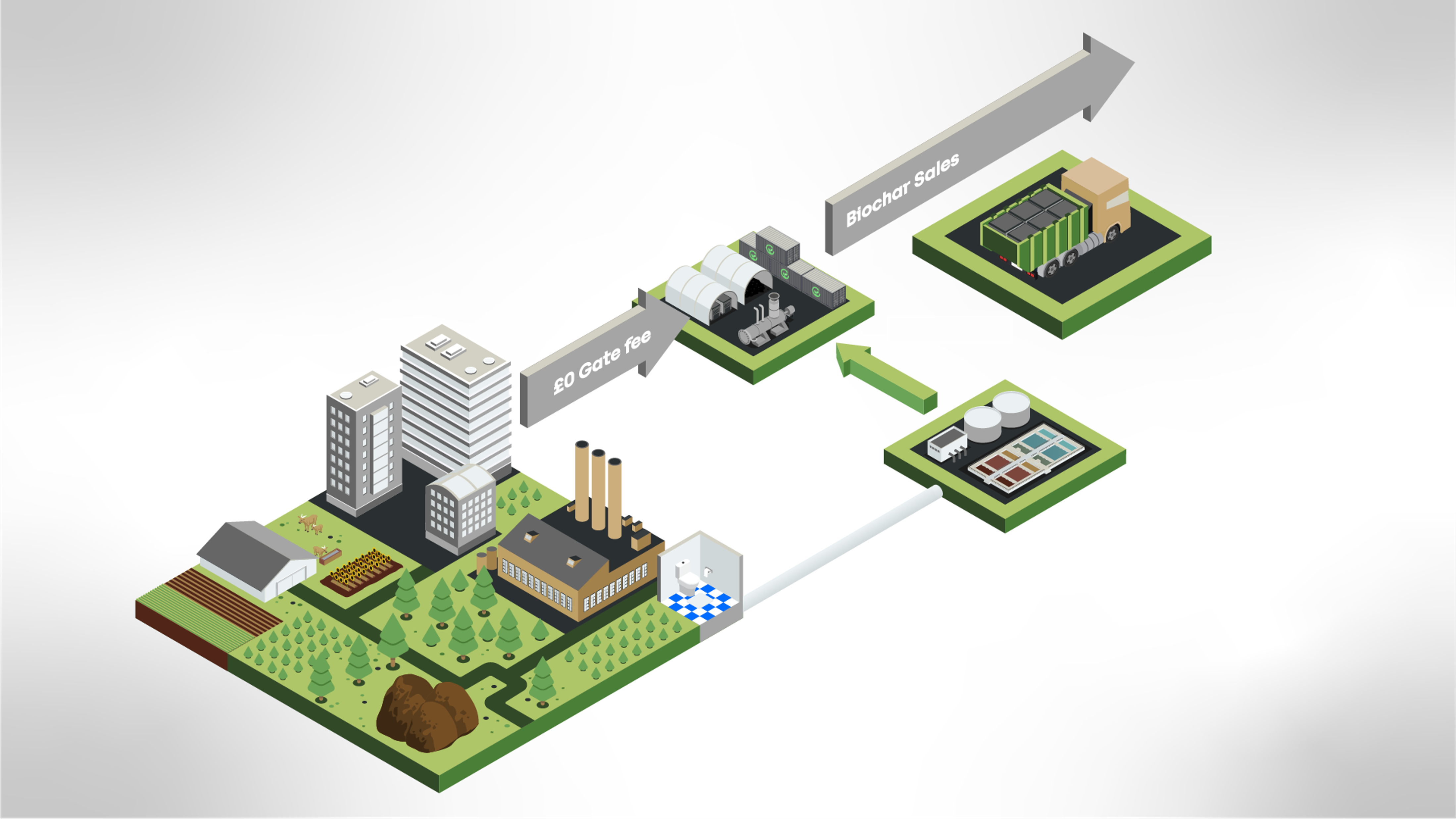
Recycle Roots’ modular systems are designed to adapt to multiple industries, turning difficult biomass waste into valuable outputs while reducing emissions and energy costs.
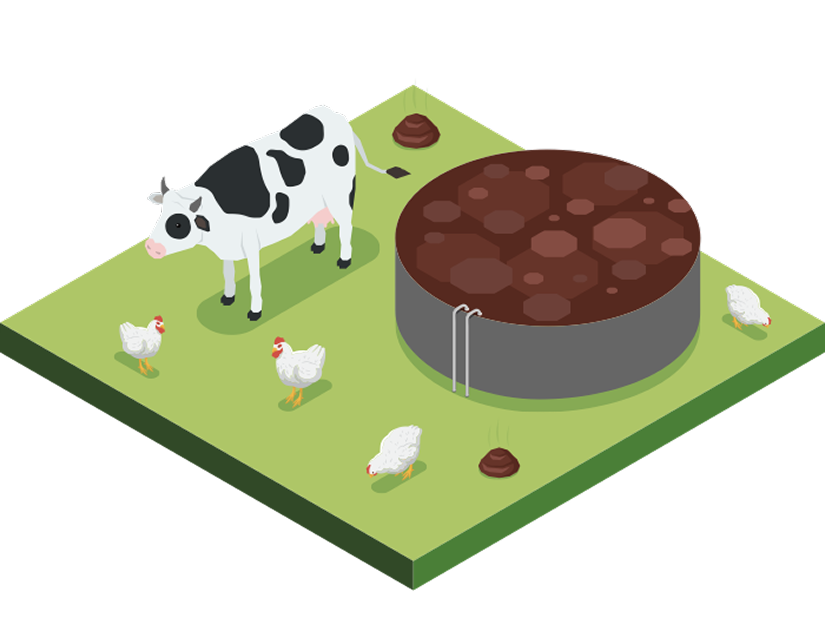
Animals reared in intensive farming operations, generate quantities of manure and organic by-products (30-50kg wet waste per cow per day). While some manures are used as fertilizer, increasing environmental restrictions around nutrient runoff and emissions mean farmers now face significant costs and legislation to store and manage their slurries. RR provides on-site waste disposal as a service at very low or no cost to producers through a Disposal-as-a-Service (DaaS) model—we own and operate robust, modular equipment under simple "hole in the wall" agreements. Our process converts livestock waste into biochar, a valuable fertilizer supplement, soil improver and carbon sink, while co-generating low-carbon heat and power available "behind the meter" to reduce farm energy costs and support compliance with net-zero agriculture targets.

%202.webp)
Food processing, the foodchain, beverage and FMCG sectors generate organic waste as well as co-mingled wastes — from production residues, spoiled product and processing by-products. While some materials are recovered for animal feed or anaerobic digestion, tightening environmental regulations around waste disposal, transport costs, and landfill restrictions mean manufacturers face escalating costs and compliance pressures - Scale is also an issue. RR provides on-site waste disposal as a service at very low or no cost to producers through a Disposal-as-a-Service (DaaS) model—we own and operate robust, modular equipment under simple "hole in the wall" agreements. Our process converts organic waste into biochar, a valuable co-product with a growing market and verified carbon offset, while co-generating low-carbon heat and power available "behind the meter" to reduce facility energy costs, improve sustainability credentials, and support corporate net-zero commitments.
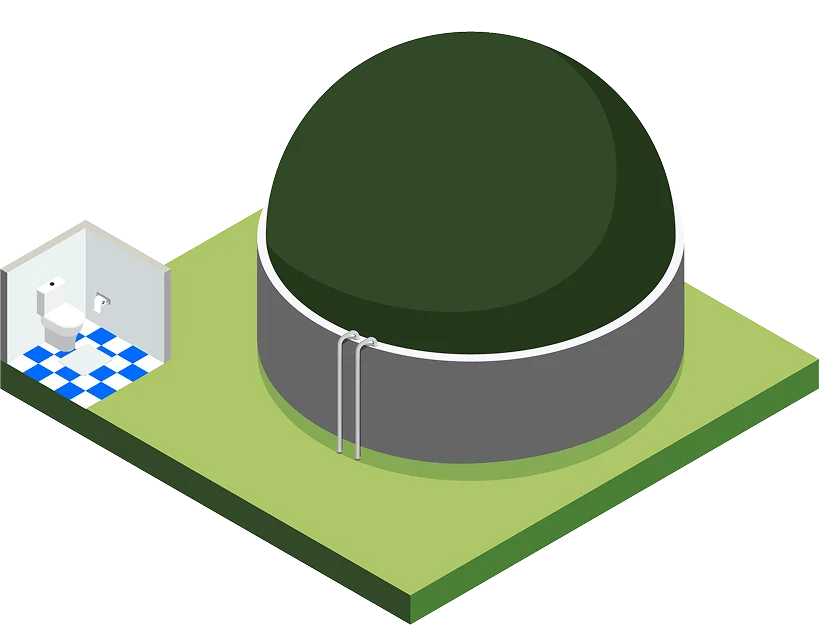
The UK alone produces in excess of 40 million tonnes of post sewage disposal process cake or solids. Traditionally these solids were disposed of by land spreading, effectively dispersing them in the environment, often on arable farm land where they were used as a cheap source of nitrogen. As the population grows, pressure on farmland increases a smaller land area is expected to absorb a greater volume of waste solids. This situation is appropriately exacerbated by tighter restrictions on spreading as we acknowledge and legislate against the increasingly well understood risks of plastics, PFAs and pathogens contained in sewage cakes as well as the risk to the environment from run off into water courses. By co-locating RR's STARR technology at sewage and AD facilities waste producers can avoid transport and disposal costs as well as avoiding competition for increasingly rare dispersal land and the risks of causing downstream pollution. Our process converts organic waste including harder to process and wetter feedstocks into biochar, a valuable co-product with a growing market and verified carbon offset, while co-generating low-carbon heat and power available "behind the meter" to reduce facility energy costs, improve sustainability credentials, and support corporate net-zero commitments.
"Fibre only" AD facilities typically return their post process cake to their feedstock providers (arable AD crops) who receive back a proportion of their input as clean organic and biomass based cake for use as a mulch fertilizer. However AD sites whose processing includes feedstock derived from the domestic food and supply chains are limited in their means of downstream disposal by the presence of animal by-products and packaging in their post process fibre, no matter how good their depackaging processes. By co-locating RR's STARR technology at AD facilities to process post AD food chain by-waste AD facility operators can avoid transport and disposal costs as well as avoiding the downstream risk of causing land and water contamination and the competition for increasingly rare dispersal land. Our process converts organic waste including harder to process and wetter feedstocks into biochar, a valuable co-product with a growing market and verified carbon offset, while co-generating low-carbon heat and power available "behind the meter" to reduce facility energy costs, improve sustainability credentials, and support corporate net-zero commitments. Our process can and will handle low proportions of packaging, including plastics appropriately.
Our advantage comes from combining proprietary technology with an innovative service model. Together, they enable consistent performance, lower costs, and scalable deployment.
Higher biochar yield
Novel way to heat and control the pyrolysis reactor. Patent pending (TBC).
Biochar yield
Biochar quality
Feedstock quality and diversity
.webp)
Biomass processed per unit
RR’s Disposal as a Service (DaaS) model offers producers a “hole in the wall” solution, reducing cost, improving resilience, and preventing valuable carbon from being lost. DaaS also ensures that RR controls the biochar, which is sold downstream at - £450/t.Each modular RR unit:
Processes - 7,000 t of waste biomass per year
Produces - 1,200 t of biochar
Operates at industry - leading cost per tonne
Capex per unit is ~£1.98m, delivering earnings of - £360k per unit (excluding value of any CDRs)
Let’s talk about your biomass waste challenge and explore how Disposal as a Service can eliminate costs, reduce emissions, and deliver permanent carbon impact.
Explore Our Solutions
.svg)

Recycle Roots transforms difficult biomass into high-value biochar using on-site, modular technology.


.svg)

